
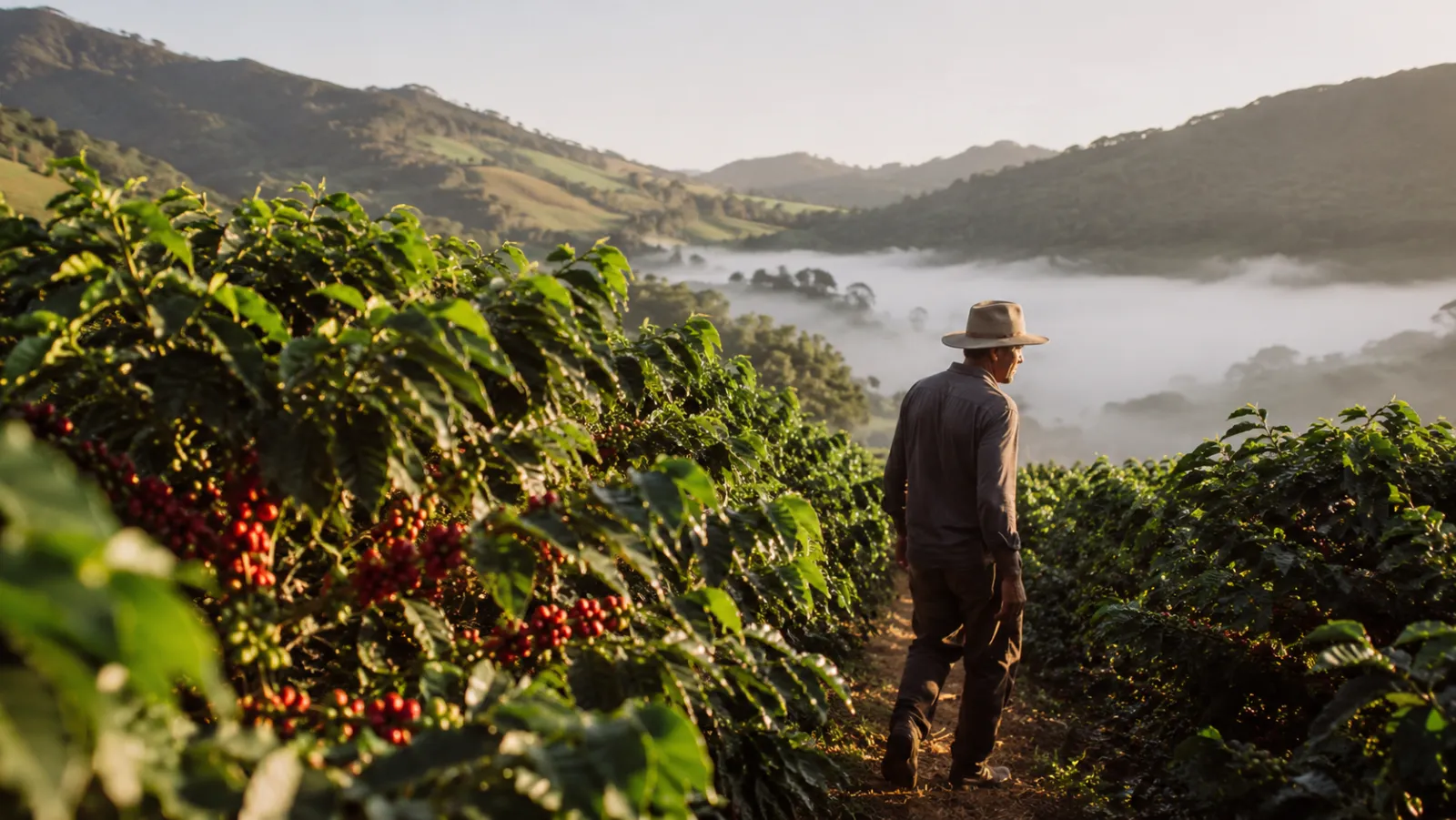
Ecuador exports much of what it produces: cocoa, bananas, shrimp, flowers, coffee and wood. For those supply chains, the carbon footprint and traceability stopped being voluntary as soon as European buyers started asking for them.
In Ecuador, measuring the carbon footprint is voluntary: there is no carbon tax and no general mandatory reporting. The national framework is the Ecuador Carbon Zero Programme (Programa Ecuador Carbono Cero), run by the Ministry of Environment and Energy, which recognises quantification, reduction and neutrality of emissions at three levels. The most immediate pressure comes from abroad: the EU Deforestation Regulation (EUDR) applies to cocoa, coffee and wood from 30 December 2026.
This guide summarises how each one works and where to start.
Ecuador Carbon Zero Programme: three levels
The Ecuador Carbon Zero Programme was created in 2021 by Ministerial Agreement 018. It is now run by the Ministry of Environment and Energy, with support from UNDP and other cooperation organisations. It has its own technical standards for organisations (Ministerial Agreement 047) and for products (Ministerial Agreement 046).
It recognises three levels:
- Quantification mark: the organisation measured and reported its carbon footprint.
- Reduction certificate: it demonstrated a decrease in its emissions.
- Neutrality certificate: it offset its remaining emissions.
What to know before applying:
- Eligible applicants are public, private or mixed entities, domestic or foreign, that are legally constituted. They must first join the programme.
- Verification is mandatory and is carried out, before applying, by a Conformity Assessment Body authorised under the programme.
- Procedures with the Ministry are free of charge. Verification is not; its cost depends on company size and audit days.
- The quantification mark is valid for one year, so the footprint has to be measured again.
For the neutrality level, the programme has its own offset scheme using Carbon Equivalent Units (UCE), generated by mitigation initiatives authorised in the country.
EUDR: the most urgent requirement for exporters
The EUDR requires cocoa, coffee, palm oil, wood and their derived products entering the European Union to prove they do not come from land deforested after 31 December 2020, with the geolocation of each plot.
| Operator | Applies from |
|---|---|
| Large and medium operators, and micro and small operators in the timber sector | 30 December 2026 |
| All other micro and small operators | 30 June 2027 |
For Ecuador, the impact is concentrated on cocoa, coffee and wood (including balsa). In May 2026 the European Commission also proposed adding soluble coffee. Our EUDR guide covers what to prepare in detail.
Bananas, shrimp and flowers are not covered by the EUDR. But their European and North American buyers increasingly ask for a product carbon footprint for their own Scope 3, and that is where ISO 14067 applies.
What to measure in your case
| If you… | What to prepare |
|---|---|
| Export cocoa, coffee or wood to the EU | EUDR traceability and geolocation |
| Export bananas, shrimp or flowers | Product carbon footprint (ISO 14067) |
| Want national recognition | Corporate footprint for the Ecuador Carbon Zero Programme |
| Export steel, aluminium or cement to the EU | Embedded emissions for CBAM |
If you are not sure which study you are being asked for, this comparison of LCA, EPD and carbon footprint helps you decide.
Where to start
- Ask your buyer what data they need and in what format. It avoids measuring what nobody asked for.
- If you export cocoa, coffee or wood, start with geolocation. It is the most labour-intensive requirement and the one that stops the most shipments.
- Measure the corporate footprint once and reuse it: it serves the Ecuador Carbon Zero Programme and is the basis for the product footprint.
- Prepare the data for verification from the start: traceable consumption, justified emission factors and documented assumptions.
Frequently asked questions
Is measuring the carbon footprint mandatory in Ecuador?
Not as a general rule. The Ecuador Carbon Zero Programme is voluntary. The practical requirement comes from international buyers and from EU regulations such as the EUDR and CBAM.
What levels does the Ecuador Carbon Zero Programme have?
Three: quantification mark, reduction certificate and neutrality certificate. All require verification by a Conformity Assessment Body authorised under the programme.
Does the EUDR apply to Ecuadorian cocoa?
Yes. Cocoa and its derivatives, such as chocolate, are covered. It applies from 30 December 2026 to large and medium operators, and from 30 June 2027 to all other micro and small operators.
Are bananas and shrimp covered by the EUDR?
No. But their buyers increasingly ask for a product carbon footprint for their climate targets, calculated under ISO 14067.
The bottom line
In Ecuador, the carbon footprint is not required by the state: it is required by the market. For cocoa, coffee and wood exporters the key date is December 2026; for everyone else, the product footprint is what keeps the buyer’s door open.
At EcoAsesoría we prepare product and corporate carbon footprints ready for verification, support EUDR preparation for coffee and agroindustry, and work remotely with companies in Ecuador. If your buyer is already asking for the data, tell us about your case.