
LCA / ISO 14040 / ISO 14044
Life Cycle Assessment
Convert product data into environmental evidence for buyers, EPDs, product carbon footprint and reduction decisions.
Industry
We structure coffee environmental data for buyers, differentiation, impact reduction and water management.
Industry context
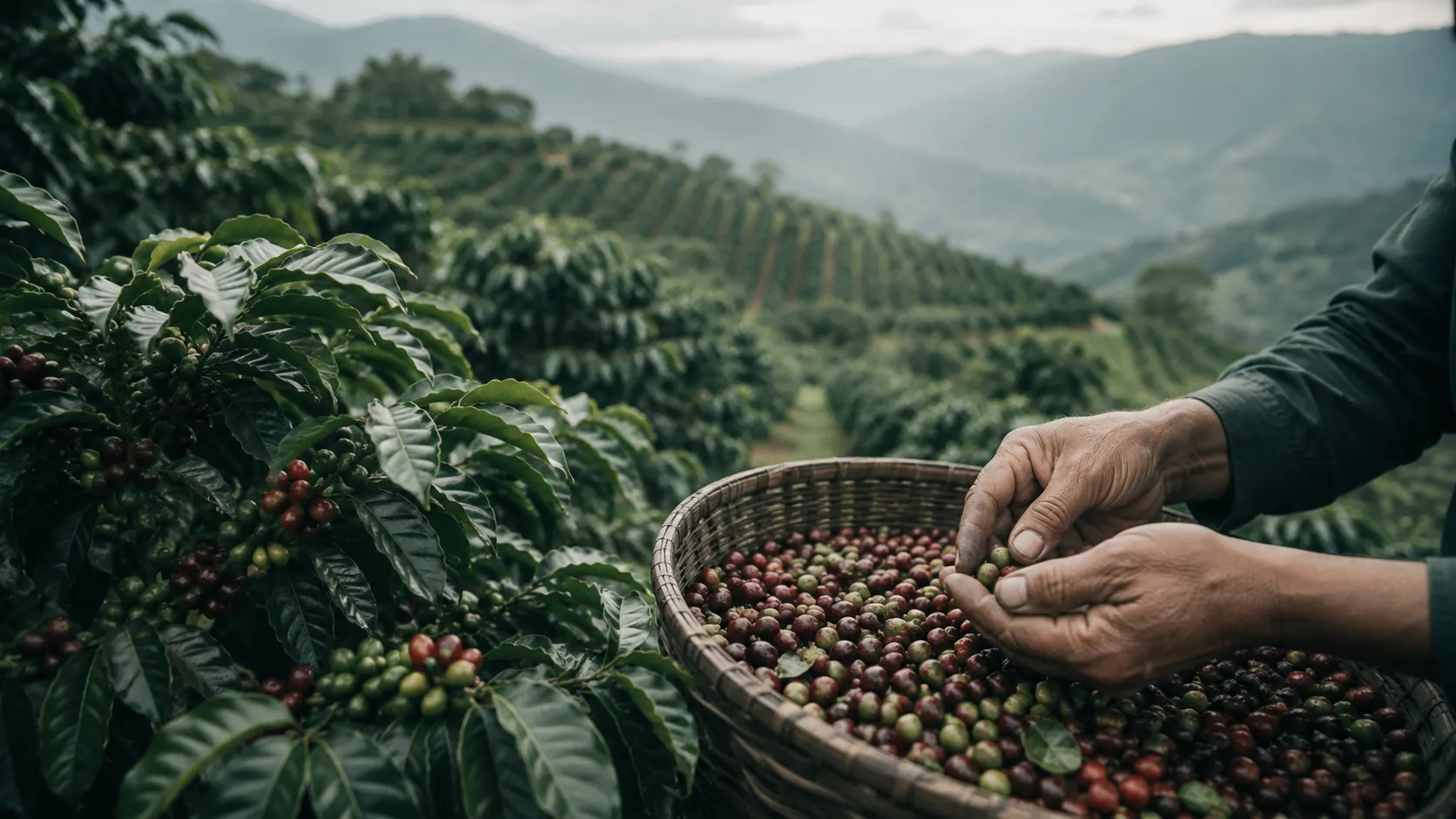
Coffee is one of the commodities covered by the EUDR: every lot entering the EU must be linked to geolocated plots and accompanied by a due diligence statement demonstrating that it is deforestation-free after 31 December 2020. Life Cycle Assessment studies consistently show that most environmental impacts occur during cultivation and primary processing, while ocean freight generally represents a much smaller share of the carbon footprint. As a result, buyers and roasters increasingly focus their data requests on farming practices, traceability and upstream environmental performance.
Pressures
In order of priority, the pressures that lead this industry to look for environmental evidence
Importers and roasters that make environmental data a condition of purchase.
Pressure to quantify and reduce farm, processing and transport emissions.
High water use in processing and the need to trace every lot's origin.
Outcomes
Sector keys
The standards, requirements and buyer demands that now set the environmental agenda for this sector
Green coffee exported to the EU needs GPS coordinates for each plot and proof of no deforestation after 31 Dec 2020; the scope is expected to extend to derived products such as soluble coffee.
Wet processing (fermentation and washing) is the main water-consumption and wastewater hotspot; an ISO 14046 water footprint documents both, and specialty buyers increasingly ask for it.
For the carbon footprint (ISO 14067), farm and processing dominate the result far more than ocean transport, so that is where mitigation and data effort belong.
CBAM applies only to cement, steel, aluminium, fertilizers, electricity and hydrogen; for coffee the binding EU lever is the EUDR, not a carbon border tariff.
Applicable services
LCA / ISO 14040 / ISO 14044
Convert product data into environmental evidence for buyers, EPDs, product carbon footprint and reduction decisions.
Product / ISO 14067
Calculate and document product carbon footprint for customers, Scope 3 supply chains and international markets.
Water / ISO 14046
Assess water impacts of products, processes or organizations to manage risk, water and environmental performance.
Tell us your context and we prioritize the services that resolve your industry's pressures