
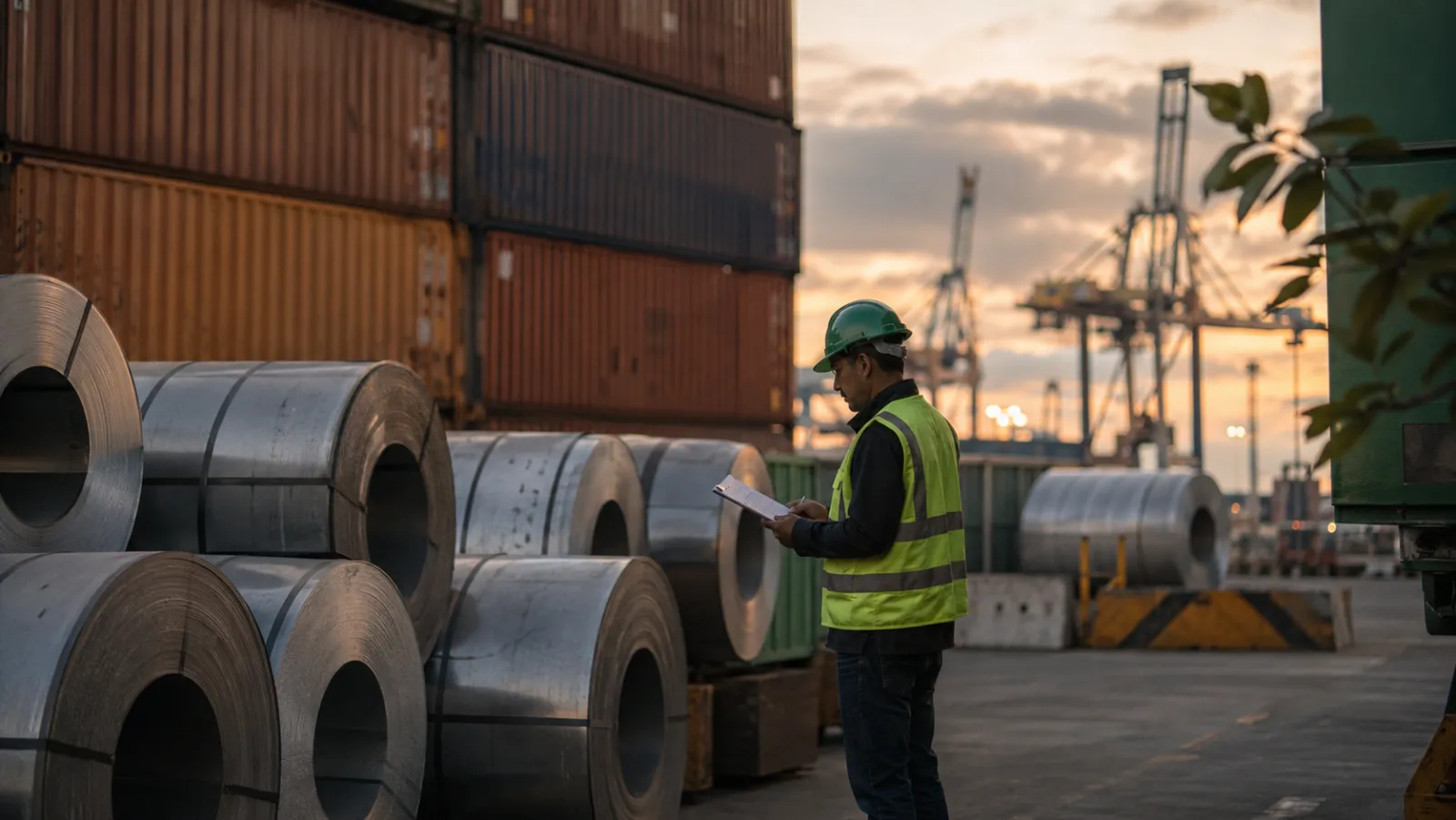
Since January 2026, selling steel, aluminium, cement or fertilizers into the European Union without verified emissions data has quietly become more expensive. Not as a figure of speech: when an exporter fails to provide its actual embedded emissions, the EU importer must apply deliberately conservative default values — higher ones — and that extra cost lands, sooner or later, on your product’s negotiating table.
CBAM (the Carbon Border Adjustment Mechanism) is not a tax you pay directly. But it decides whether your product stays competitive in Europe. And most of the guidance out there is written for the EU importer, not for the company manufacturing and shipping from outside the bloc. This one is for the other side of the container.
What CBAM is and which products it covers
CBAM puts a price on the carbon embedded in certain goods entering the EU, to level the field against European industry, which already pays for its emissions. In its current phase it covers six groups: iron and steel, aluminium, cement, fertilizers, hydrogen and electricity.
If your company exports any of these to the EU — directly or as a component — you are on the radar. Other sectors (coffee, food, textiles) are not, at least for now. Assuming CBAM touches everything you export is a common and costly mistake.
Who pays CBAM, the exporter or the EU importer?
Formally, the EU importer pays. From 2027, it will buy CBAM certificates matching the embedded emissions of what it imports. The timeline has a nuance worth getting right: the definitive regime started on 1 January 2026, but certificate purchase and surrender were postponed to 2027 (the first annual declaration with certificate surrender is due 30 September 2027).
Here is the part that lands on you. That importer needs a number — your product’s emissions — to work out how many certificates to buy. If you provide it, verified and properly calculated, the cost reflects your real performance. If you don’t, a default value designed to penalise missing data is used instead. In plain terms: the supplier who shows up with the real number gains margin over the one who shows up without it.
What embedded emissions are and how they’re calculated
Embedded emissions are the greenhouse gases tied to producing one tonne of your product: direct process emissions plus, in some cases, the indirect emissions of the energy consumed. They are calculated at installation level, following the CBAM Implementing Regulation methodology, and to be credible to the buyer they must be traceable and verifiable.
This is not the same as a corporate carbon footprint. The focus here is the product, the installation and the specific production routes. In practice it is a product carbon footprint scoped to what CBAM requires.
The mistake we see most: companies answering with generic database averages when the buyer asked for primary data from their own plant. The average is sometimes worse than the default value, and it is always harder to defend.
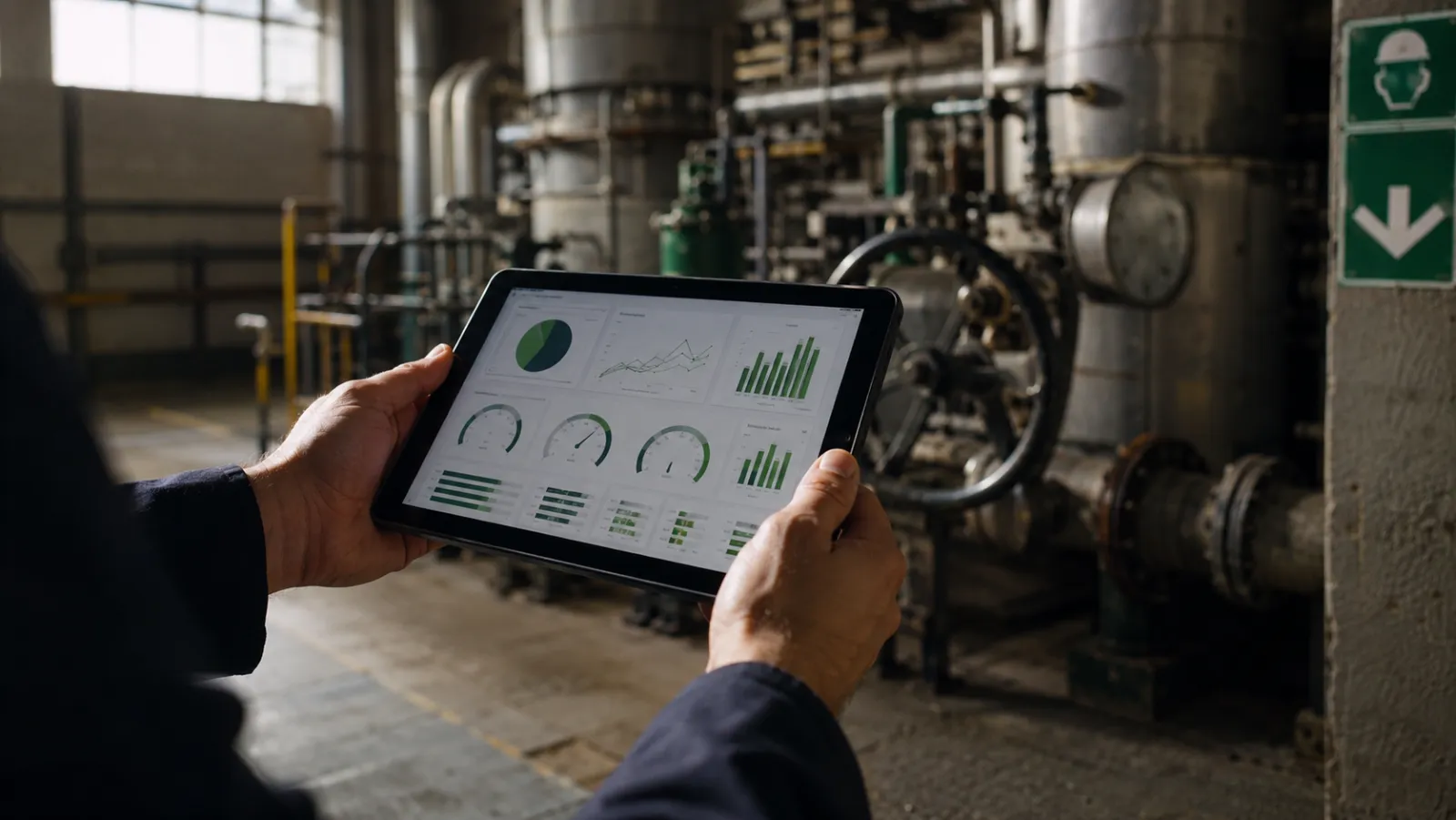
The 50-tonne threshold: you may fall outside it (but prepare the data anyway)
The 2025 simplification introduced a de minimis exemption of 50 tonnes of CBAM goods per importer per year. Under it, most small importers fall outside the scheme — though the bulk of emissions stays covered, since large volumes don’t benefit from the threshold.
Does that mean you can forget about it? If all your shipments to a customer add up to under 50 tonnes a year, that importer has no obligation. But it only takes a bigger order, or a buyer consolidating suppliers, for the data to be needed again. Having your emissions calculated and ready is what lets you answer in days, not weeks, when the question arrives.
Actual versus default values: the table that matters
The underlying decision is simple: hand over your real number, or let the default apply. This comparison sums up why the first almost always pays off.
| Verified actual data | Default value | |
|---|---|---|
| Cost for the importer | Reflects your real performance | Conservative, higher |
| Your commercial position | Differentiated, defensible | Levelled with the worst in your category |
| Effort | Requires calculating and verifying | None, but you pay in competitiveness |
| Reuse | Serves customers, EPDs and reporting | Useful for nothing else |
Look at the last row: the data you prepare for CBAM doesn’t die there. The same basis serves to answer other buyers, to build an EPD, or to feed your corporate reporting. The default value, by contrast, leaves you with nothing.
What to prepare before the buyer asks
An exporter who wants to arrive with the homework done needs, at minimum:
- Installation identification and its production routes.
- Process energy and fuel consumption.
- Emission factors for the precursors (relevant raw materials).
- An emissions-per-tonne calculation following the CBAM methodology.
- The documentation that lets a third party verify it.
You don’t need it all perfect on day one. You need to start before the order depends on it.
Frequently asked questions about CBAM
Does CBAM affect my company if I export coffee or food?
Not today. CBAM covers iron and steel, aluminium, cement, fertilizers, hydrogen and electricity. If you export coffee, the binding EU lever is a different one — the EUDR — not CBAM.
When do CBAM certificates start being purchased?
The definitive regime began in January 2026, but certificate purchase and surrender apply from 2027, with the first annual declaration due 30 September 2027.
What happens if I don’t provide real emissions data?
The importer applies higher default values, and that extra cost pressures your price or your commercial relationship. It isn’t a fine on you, but it is a loss of competitiveness.
Does a corporate carbon footprint work for CBAM?
Not directly. CBAM asks for emissions at product and installation level, with its own methodology. A corporate footprint is a good starting point, but it doesn’t replace the specific calculation.
The bottom line
CBAM doesn’t punish those who export: it punishes those who export blind. Real emissions data is what separates a supplier who negotiates with arguments from one who absorbs an extra cost that isn’t even theirs.
At EcoAsesoría we help exporters calculate and document their embedded emissions so they can answer CBAM with evidence, not default values. If a European buyer has already asked you for data — or you sense they will — let’s talk about your case before the order depends on it.